
The Responsibilities, Rights, and Service Coverage of Content Producers, Distributors, and Platform Operators
When an episode disappears, subtitles are missing, or a subscription charge is incorrect, users often try to identify whether the producer, distributor, or streaming platform caused the problem.
In practice, that distinction is rarely visible from the screen. One company may perform several roles, while another may own only limited rights for a particular country, language, device, or period. The business that produced the work may not operate the service, and the service that accepted your payment may not control every subtitle track or release date.
The most useful approach is not to guess which company caused the problem. Start with the business that sold or provided the service, give it enough evidence to identify the issue, and allow it to escalate the case to its licensing, localization, distribution, or technical partners.
One Company May Hold Several Roles at the Same Time
A producer is generally responsible for planning and overseeing the creation of the work. Under Korea’s current Content Industry Promotion Act, a content producer is the party that plans and assumes responsibility for the overall production process, including a party that has lawfully acquired that position. The Act separately defines a content business operator as a person or company engaged in economic activity related to producing or distributing content.
That definition does not prove that the producer owns every right used in the finished work. A drama may include music, archival footage, a translated script, performers’ rights, and source material licensed from several parties. Rights may also have been assigned to a broadcaster, investor, publisher, or international sales company.
A distributor usually connects the content with broadcasters, streaming services, retailers, or overseas markets. Its agreement may cover only certain countries, languages, platforms, or release periods. It may also coordinate delivery files, artwork, metadata, subtitles, dubbing, and content-protection requirements.
The platform operator manages the service the viewer actually uses: the account, application, website, playback system, payment page, device support, recommendations, and customer service. The same company may also finance an original production, hold distribution rights, or operate a separate production studio.
For that reason, the credits page or company logo does not provide a complete responsibility map. The producer, copyright holder, distributor, localization vendor, billing company, and platform may all be different—or several of those roles may belong to one company.
The Name on the Receipt Usually Identifies the First Contact
For a user-facing problem, begin with the company named as the merchant, subscription provider, or service operator on the receipt and account page.
Korea’s Content User Protection Guidelines expect content businesses to disclose important information before a contract is completed. This includes information about the producer and seller, the content and its restrictions, the price and payment method, delivery or access conditions, withdrawal and cancellation rules, refund and warranty procedures, technical requirements, and the process for complaints and disputes.
That makes the service provider the practical first door even when another company ultimately caused the defect.
| Problem | First contact | Evidence to provide | Possible internal escalation |
|---|---|---|---|
| Incorrect charge, renewal, cancellation, or refund | Merchant or billing provider shown on the receipt | Order number, plan, payment date, amount, and cancellation record | Billing or payments team |
| Login, app, buffering, device, or playback failure | Platform support | Device, operating system, app version, error code, and time of failure | Technical operations |
| Missing subtitle, audio track, episode, or incorrect metadata | Platform support | Exact title, season, episode, language, screenshots, and affected devices | Content operations, localization provider, distributor, or licensor |
| A title disappears or is unavailable in Korea | Platform support | Exact title, account region, profile, date last available, and displayed notice | Rights and licensing team |
| Purchased or rented content cannot be opened | Business that sold the access | Receipt, access type, account, title page, and error message | Commerce, account-entitlement, or licensing team |
The platform may not disclose the identity of every upstream contractor. It should still be able to confirm whether the issue concerns your account, a technical defect, a scheduled release, a regional restriction, or a known content problem.
Contacting the producer directly is usually ineffective for payment, login, or app problems because the producer may have no access to your account or transaction.
Content Errors Need a Traceable Report, Not a Guess About the Cause
A missing subtitle does not automatically prove that the distributor forgot to supply it. The cause may be an account-language setting, device limitation, incomplete source material, licensing restriction, delayed localization, or an error during the platform’s content-processing stage.
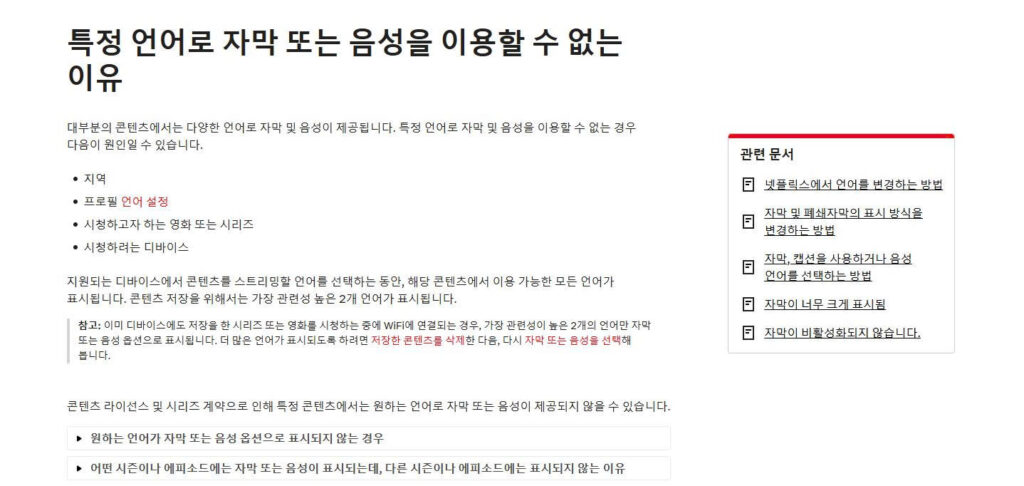
Netflix’s Korean help documentation illustrates this uncertainty. It states that a desired subtitle or audio language may be unavailable because of content licensing or series agreements. Different seasons can use different language sources, and some older devices may not display every supported language.
Missing episodes can also have several explanations. Netflix notes that licensed episodes may be released according to the original broadcaster’s schedule, so a gap can reflect a delayed original broadcast rather than a file accidentally omitted by the platform.
The viewer normally cannot determine which company in the delivery chain caused the problem. A useful report should therefore describe what happened without assigning blame.
Include the exact title, season and episode number, playback time if the defect occurs during a scene, expected and available languages, account region, device model, operating system, app version, error message, and screenshots. Also state whether the same issue appears on the website, mobile app, and another device. For complaints about softness, compression artifacts, or inconsistent picture quality, Resolution and Perceived Quality Gaps in 1080p Streaming explains why two streams carrying the same resolution label can still differ because of bitrate, codec, source mastering, adaptive delivery, and device playback.
This evidence lets the platform distinguish among a local device problem, a profile setting, an incorrect metadata entry, a defective media file, and content that was never licensed for that account or region.
Avoid sending only “the subtitles are broken” or “episode 4 is missing.” The support team may provide a generic answer because it cannot identify the specific asset. A precise report gives the platform enough information to reproduce the issue and escalate it internally.
Content Availability Is a Rights Question, but Not Every Disappearance Has the Same Cause
A title can become unavailable because a licence expires, the relevant territorial rights are held by another company, a release has not started in Korea, or the user’s profile and location do not meet the access conditions.
Netflix lists several possible reasons a title may not appear: it may not yet be released in the country, the necessary rights may not be available in that region, the profile’s maturity rating may block it, the selected profile language may affect discovery, or VPN use may alter what the service displays.
When a title is scheduled to leave, Netflix can display a “Last day to watch” notice on the title page or when playback begins. That notice communicates the platform’s current access window; it does not reveal every negotiation or contract behind the decision.
It is therefore too simple to say that a producer decided to remove the title or that the platform independently chose to delete it. The current availability may depend on agreements among creators, production companies, broadcasters, distributors, music licensors, regional rights holders, and the platform.
The user should focus on facts that can be confirmed:
- Is the exact title or episode still included in the current Korean catalog?
- Is the restriction tied to the account, profile, device, or region?
- Is there an announced removal or release date?
- Does the purchase represent a subscription, rental, or longer-term access right?
- Is another authorized platform currently offering the title?
The platform that advertises and supplies the service should explain the access status visible to the user, even when it cannot disclose confidential licensing terms.
An Unresolved Case Needs a Complete Record and the Right Escalation Route
When first-line support cannot solve the issue, ask for a written case number and a clear status. The response should ideally identify whether the problem is technical, account-related, payment-related, scheduled for correction, limited by content rights, or still under investigation.
Keep the receipt, terms shown at purchase, title page, screenshots, error messages, dates, support conversations, and any promised resolution time. If the page or terms later change, this record shows what was offered when the transaction occurred.
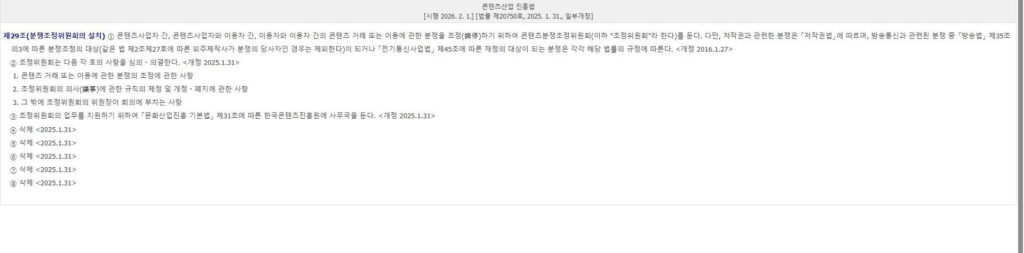
For a billing issue, the next contact may be the app store, payment processor, or card issuer that handled the transaction. For a content-access or service dispute that remains unresolved, Korean users can consider the Content Dispute Resolution Committee. The current Content Industry Promotion Act establishes the committee to mediate disputes concerning content transactions or use between content businesses and users. Amendments effective in February 2026 expanded the available dispute-resolution mechanisms.
A dispute about who owns the underlying copyright may follow a different legal process. A normal subscriber complaint about access, billing, defective content, or failure to provide the purchased service should first remain focused on the contract between the user and the business that supplied the service.
The practical rule is:
The producer helps create the work. The rights holder controls particular uses. The distributor connects the work with markets and services. The platform delivers the user-facing product. When something goes wrong, begin with the company that sold or supplied your access and require it to trace the problem through its own partners.