
Online Services That Require Both Domestic and Local Accounts When Starting Life Abroad
Moving abroad usually creates a temporary period in which you need two account systems at the same time.
Your Korean accounts may still be needed for banking, taxes, insurance, refunds, subscriptions, identity verification, and documents. Local accounts are needed for the services connected to your new address, employer, phone number, and residence status.
The safest approach is to manage the transition in three stages:
Protect Korean access before departure → open essential temporary services after arrival → complete the local setup after receiving residence documents.

Before Departure: Secure Access to Your Korean Accounts
Do not begin by closing Korean bank accounts or cancelling your phone number. First identify every service that still depends on them.
Some Government24 services require simple authentication or a joint or financial certificate. Government24 also explains that a certificate may need to be imported separately into its mobile app before it can be used there.
Hometax and Sontax currently support several login methods, including joint or financial certificates, simple authentication, mobile identification, and account credentials. Certain certificates must be registered in advance.
Before leaving Korea, test the services you expect to use abroad:
| Korean account or service | Why you may still need it | What to prepare |
|---|---|---|
| Korean bank account | Refunds, loan payments, insurance, transfers, Korean income or expenses | Check overseas login, transfer limits, OTP, certificates, and support numbers |
| Korean payment card | Existing subscriptions, Korean purchases, emergency payments | Confirm overseas use, expiration date, alerts, and replacement procedure |
| Korean mobile number | SMS verification, account recovery, banking alerts, contact from Korean institutions | Check roaming, number-retention options, fees, and whether SMS works abroad |
| Government24 | Certificates and Korean administrative services | Test login and register or copy the required certificate |
| Hometax/Sontax | Korean tax records, filings, payment history, and certificates | Confirm authentication and account-recovery methods |
| Email and password manager | Recovery links and security notices | Update recovery details and save backup codes |
| Insurance, pension, loans, and utilities | Ongoing contracts or final settlements | Save contract numbers, payment dates, and cancellation conditions |
Where possible, move away from SMS-only authentication. Register an authenticator app, hardware OTP, certificate, recovery email, or backup codes when the service supports them.
Also save offline copies of important records, including recent bank statements, tax documents, insurance policies, lease records, employment documents, subscription receipts, and customer-support case numbers.
After Arrival: Open Only the Local Accounts Needed Immediately
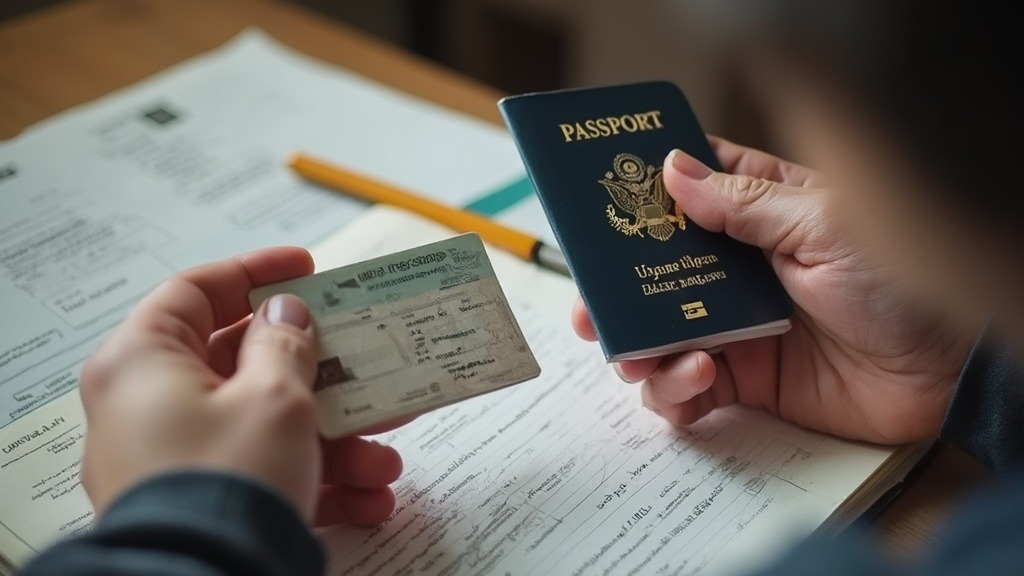
During the first days abroad, you may not yet have a permanent address, residence card, local tax number, or complete banking documents. Do not try to open every account at once.
Start with the minimum services needed to function:
- A prepaid SIM or temporary mobile plan
- A payment method accepted locally
- A bank account if required for salary or housing
- Transport and essential government applications
- Internet and utilities for the permanent residence
Requirements vary by country and provider. A bank may ask for a local phone number, while a postpaid mobile company may ask for a local bank account. A utility company may require proof of address that is not available until the rental contract begins.
When these requirements form a loop, look for temporary routes such as a prepaid SIM, an employer- or university-supported bank application, an international card, or a provider that accepts a passport and temporary address.
Keep the Korean and local systems running in parallel while you confirm:
- Your salary reaches the correct account.
- Rent and utility payments work.
- Your local phone number receives authentication messages.
- Korean services remain accessible.
- International transfers arrive successfully.
- There are no unexpected recurring charges or foreign transaction fees.
A Korean card may work for ordinary purchases but still be rejected for local subscriptions, direct debits, mobile contracts, or utilities. Check the accepted payment methods on the exact service rather than assuming that an internationally branded card will work everywhere.
After Receiving Local Residence Documents: Complete the Local Setup
Once you receive the required local ID, residence permit, address registration, or tax number, replace temporary arrangements with stable accounts.
Depending on the destination, this may include:
- A full local bank account
- A postpaid phone plan
- National or local digital identification
- Tax and social-insurance portals
- Health-service accounts
- Utilities and home Internet
- Employer payroll and pension accounts
Keep a record of which identity, phone number, email address, and payment account is connected to each service. This is especially important when a temporary SIM or address was used during registration.
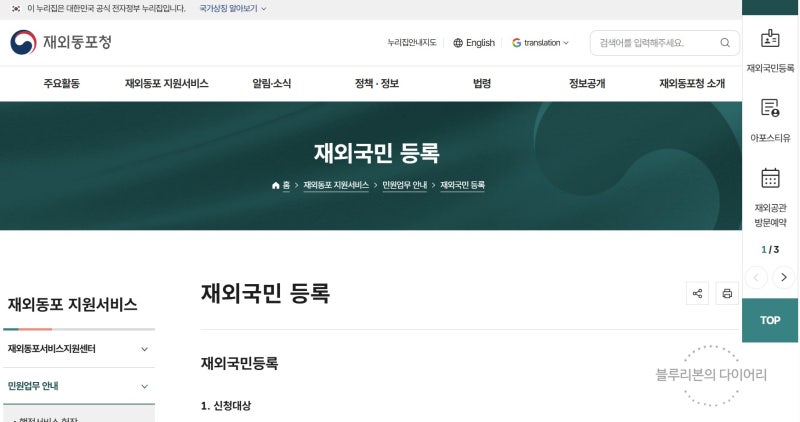
Korean citizens intending to stay in one overseas area for more than 90 days are within the stated scope of overseas Korean national registration. The Overseas Koreans Agency says registration can be completed through the Overseas Korean 365 portal or through the relevant Korean diplomatic mission.
The Overseas Korean 365 portal also provides services such as diplomatic-mission reservations, document authentication, apostille-related applications, and certificates connected with overseas residence.
Korean tax access may still be necessary if you have Korean income, property, business activity, deductions, or filing obligations. The National Tax Service provides electronic filing through Hometax and Sontax, but the exact obligations depend on tax residence, income source, and any applicable treaty.
Do not combine the Korean and destination-country tax accounts into one record. Keep separate folders for:
- Korean income and tax filings
- Local income and tax filings
- International transfers
- Exchange rates used for reporting
- Tax-residence documents
- Advice received from tax authorities or professionals
Keep Both Systems Until the Handover Is Complete
There is no universal number of months after which every Korean account can safely be closed. Close an account only after confirming that nothing important still depends on it.
Before closing a Korean bank account, card, phone number, or online service, check that:
- No salary, refund, deposit, or insurance payment is still expected.
- No loan, tax, subscription, or automatic payment remains.
- It is no longer used for two-factor authentication or password recovery.
- Government and tax services work through another authentication method.
- Pending purchase disputes and chargeback periods have ended.
- Statements, receipts, certificates, and transaction records have been saved.
- The local replacement account has worked reliably for several real payments.
- Remaining money and recurring instructions have been transferred correctly.
Keeping a Korean account may remain practical when you continue to own property, receive Korean income, maintain insurance, repay debt, support family, or use services that do not accept a foreign account.
The most reliable transition process is:
Secure Korean logins and authentication → open temporary local essentials → complete registration after receiving local documents → test both systems → close only accounts with no remaining dependency.
FAQ
Should I keep my Korean phone number after moving abroad?
Keep it while Korean banking, government, shopping, or recovery systems still send verification to that number. Before cancelling it, move each service to another supported authentication method and test account recovery.
Can I close my Korean bank account after opening a local one?
Not immediately if it still receives refunds, pays Korean bills, supports tax or insurance matters, or is connected to authentication. Close it only after every dependency has been removed.
Do I need both Korean and local tax accounts?
Possibly. The answer depends on tax residence, income sources, assets, and the destination country’s rules. Keep access to Hometax while confirming your obligations with the relevant authorities or a qualified tax professional.